
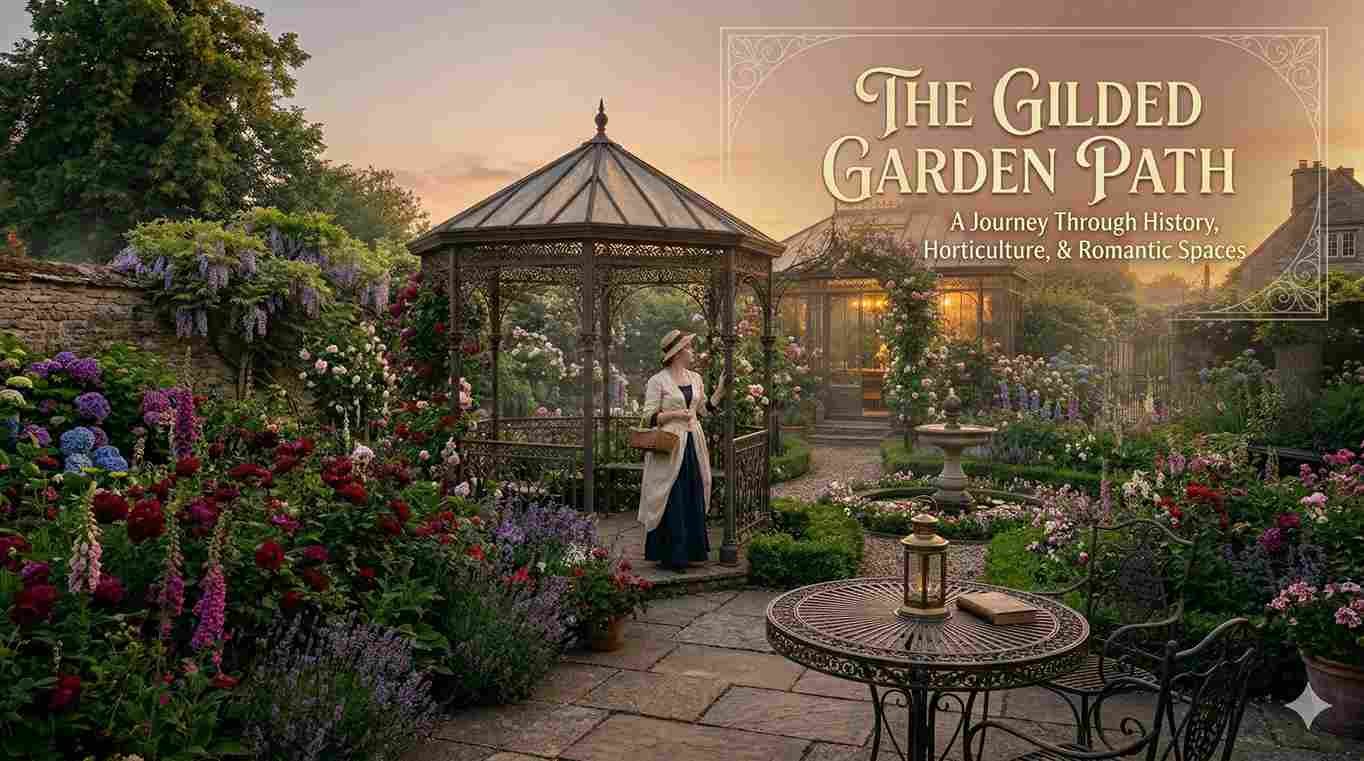
If you’ve ever looked at your backyard and thought, “This needs more cast iron, a few more exotic ferns, and significantly more structure,” you’re likely channeling the spirit of a Victorian gardener.
The Victorian era (1837–1901) wasn’t just about stiff collars and industrial revolutions; it was the golden age of horticulture. This was a time when gardening moved from a survival necessity to a high-art form and a blatant status symbol.
Let’s dig into how you can recreate a Victorian garden that would make Queen Victoria herself nod in stern approval.
1. The Philosophy of the Victorian Garden
To the Victorians, nature was something to be tamed, organized, and put on display. While the earlier Romantic period favored “wild” looks, the Victorian era leaned into the High Style.
Control and Symmetry
A true Victorian garden is rarely “accidental.” It is a calculated layout of geometric shapes, straight paths, and clear boundaries. If a plant dared to grow outside its designated circle, a Victorian gardener would likely have had a minor existential crisis.
The “New” and the “Exotic”
Thanks to global exploration, this era saw an explosion of new plant species entering Europe and North America. Having a Victorian garden meant showing off your “exotic” acquisitions—like Monkey Puzzle trees or flamboyant Orchids—to prove you were well-traveled (or at least well-funded).
2. Essential Elements of the Victorian Layout
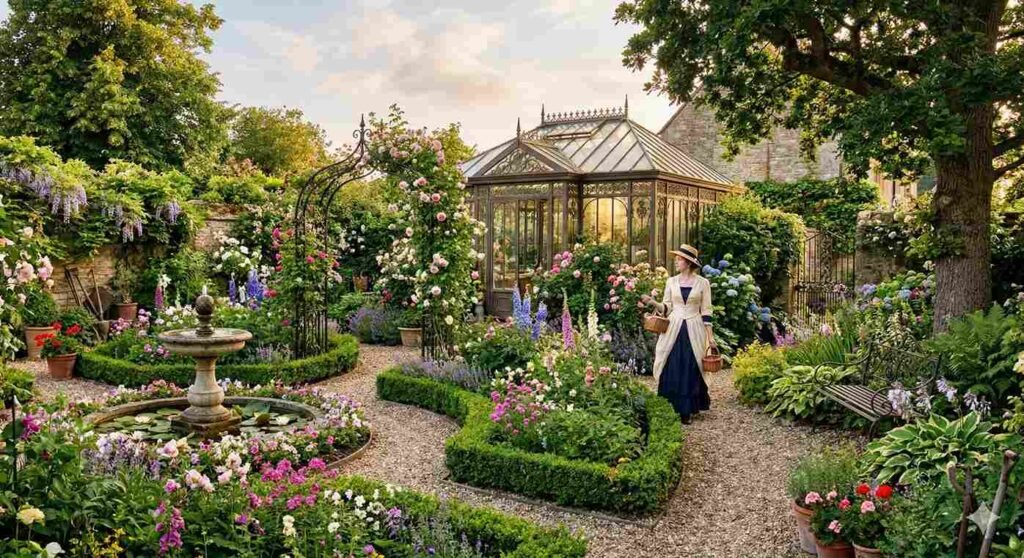
If you want to nail the SEO of your backyard (Symmetry, Elegance, and Order), you need to incorporate these specific structural elements.
The Carpet Bedding (Bedding Out)
This is the hallmark of the era. Imagine thousands of brightly colored annuals planted so closely together they look like a Persian rug.
- The Logic: It shows total dominance over nature.
- The Plants: Think Geraniums, Marigolds, and Salvia.
The Garden Path
You can’t have a Victorian garden without a proper walkway. These were typically made of gravel, crushed brick, or intricate patterned tiles. A path wasn’t just for walking; it was a stage for your Sunday promenade.
The Focal Point
Every view needs a destination. This could be:
- A sundial.
- A tiered fountain.
- A white marble statue (usually of someone looking very tragic or very Greek).
3. The Great Greenhouse Obsession
We can’t talk about this era without mentioning glass. The repeal of the Glass Tax in 1845 changed everything. Suddenly, greenhouses (or “conservatories”) became the ultimate “flex.”
The Victorian garden often centered around these glass structures. They allowed gardeners to grow tropical plants in chilly climates. If you can’t afford a full-scale Crystal Palace, a small Wardian case (the precursor to the modern terrarium) on your patio will suffice to keep the vibe alive.
4. Must-Have Plants for Your Victorian Garden
To keep your garden authentic, you need to stick to the favorites of the 19th century.
| Plant Type | Victorian Favorite | Why they loved it |
| Flowers | Roses (Hybrid Perpetuals) | For the scent and the romance. |
| Shrubs | Boxwood (Buxus) | Perfect for clipping into rigid hedges. |
| Trees | Weeping Willow | Fits the “melancholy” aesthetic perfectly. |
| Exotics | Ferns | “Pteridomania” (fern fever) was a real craze. |
The Fern Craze (Pteridomania)
Yes, “Fern Fever” was a real thing. Victorians were obsessed with ferns. They put them on wallpaper, carved them into wood, and built specialized “ferneries.” Adding a shady corner filled with various fern species is a quick way to add instant Victorian credibility.
5. Ornaments and Hardscaping
A Victorian garden is never “just” plants. It is a mix of botany and metallurgy.
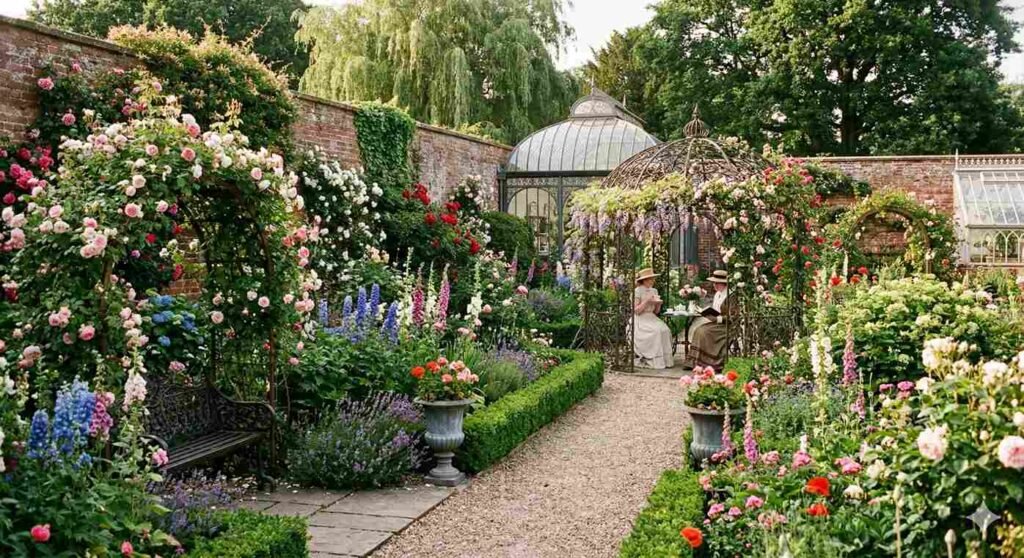
- Cast Iron Benches: Usually painted white or dark forest green. They are beautiful to look at, though arguably the least comfortable seating ever designed by humans.
- Gazebos and Bandstands: If you have the space, a wooden gazebo provides that essential “secret meeting” spot found in every Victorian novel.
- Urns and Plinths: Large stone urns overflowing with ivy or trailing lobelia add vertical interest and a sense of history.
6. Maintenance: The Victorian Way
Fair warning: the Victorian garden is not for the lazy. It requires constant deadheading, precise edging, and a commitment to order.
However, the logic holds up today: a well-structured garden increases property value and provides a structured sanctuary from the chaos of the modern world. You don’t need a staff of twenty gardeners; you just need a good pair of shears and a bit of discipline.
7. Bringing the Victorian Style into the 21st Century
You don’t have to turn your entire yard into a museum piece. You can “modernize” the Victorian look by:
- Using Native Plants: Replace thirsty exotic annuals with native perennials that mimic the same colors.
- Focusing on Geometry: Use a circular flower bed as a centerpiece in an otherwise modern lawn.
- Adding a “Nod” to the Era: A single cast-iron birdbath can evoke the feel without the maintenance of a 14-acre estate.
Trusted Sources for Further Research
To ensure your garden is historically accurate, consult these authorities:
- The Royal Horticultural Society (RHS): Their archives on 19th-century plant hunters are unparalleled.
- Smithsonian Gardens: Excellent resources on American Victorian “Gardenesque” styles.
- The Victorian Society: For architectural details on greenhouses and outbuildings.
Final Thoughts
The Victorian garden is a testament to human creativity and our eternal desire to make the world a little more beautiful (and a lot more organized). Whether you’re planting a single climbing rose or designing a full-scale knot garden, you’re participating in a tradition that celebrates the intersection of nature and art.